
PROJECT / 01
Project for Developing a Natural Capital Enhancement Business through Optimized Dyeing Wastewater Treatment
Dyeing Wastewater × Natural Capital
Move beyond making water clear: design wastewater management that helps nature thrive.
We connect a dyeing factory, laboratory, and data to redesign wastewater management as an opportunity to improve natural capital and corporate value.
CONTEXT
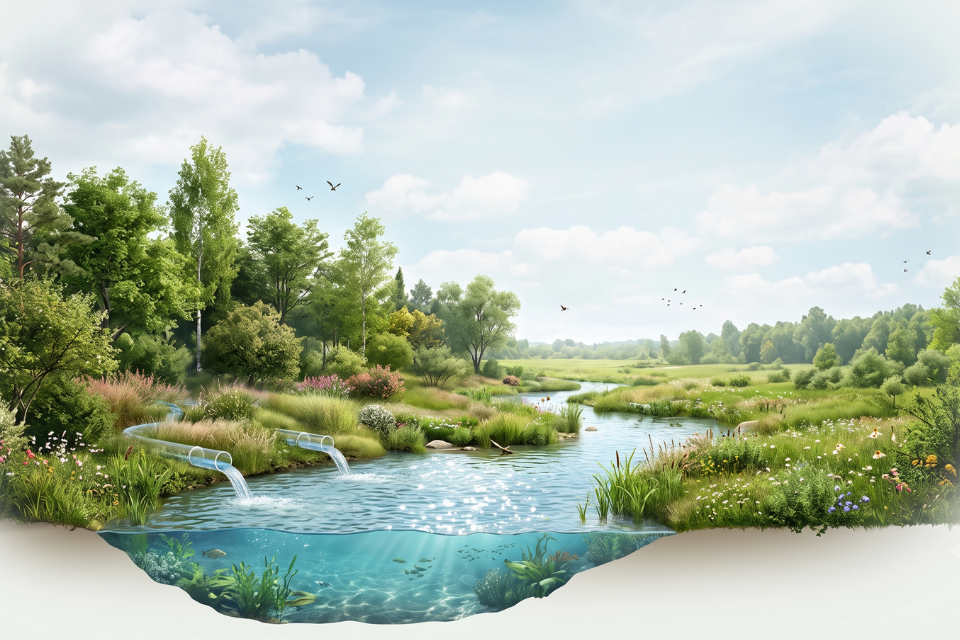
Turn wastewater into a starting point for local ecosystems
The wastewater facilities at Hase Tora Spinning in Hashima, Gifu, have been operating for 50 years and are due for renovation. Conventional treatment that simply makes water transparent may not be optimal for local nature and organisms that depend on nutrients.
WHAT WE DO
Implementation
Generate environmental data in the field
Treat the factory and receiving waters as a real laboratory.
We assess how factory operations affect the surrounding environment and organize the results as environmental indicators.
- Survey nearby ecosystems
- Quantify effects on receiving waters
- Use Nature Standards for assessment
Reproduce and validate impacts in a lab
Turn field changes into repeatable experiments.
We reproduce the surrounding ecosystem in a laboratory and test how wastewater conditions affect biodiversity.
- Reproduce the local ecosystem
- Simulate wastewater conditions
- Validate biodiversity impacts
Visualize impact with AI and advanced tools
Make natural-capital change usable for decisions.
We combine satellite imagery, AI, and biodiversity databases to make environmental impacts intuitive and measurable.
- Satellite imagery, AI, and databases
- Quantify natural-capital change
- Connect field data and management
Connect environmental improvement to value
Turn nature-positive action into a lasting model.
We calculate the economic value of environmental improvements and design an adoption model with municipalities and regional banks.
- Economic value of improvements
- Municipal and regional-bank partnerships
- Package the model for manufacturers
FIELD & PARTNERS
From Hashima to nature-positive manufacturing
We will connect field data with regional finance and public-sector partners, then scale the operating model to other manufacturers.
- Hashima, Gifu | Demonstration at Hase Tora Spinning
- Factory surroundings | Ecosystem and receiving-water data
- Regional collaboration | Municipalities and regional banks
PROJECT TEAM
Build one model from field, technology, and data
FIELD
Hase Tora Spinning Co., Ltd.
Provides the dyeing and spinning factory and wastewater facilities as a demonstration field.ECOSYSTEM
Inoca Corporation
Reproduces and evaluates ecosystems and validates environmental impacts.DATA